
We use 3rd party registry systems including ISCC, RSB, 123Carbon and Assure

The aviation industry is still increasing its emissions at an unprecedented rate, projected to triple by 2050.
Fly less, or choose flights that combine sustainability with your airfare, reducing emissions in the most practical way.
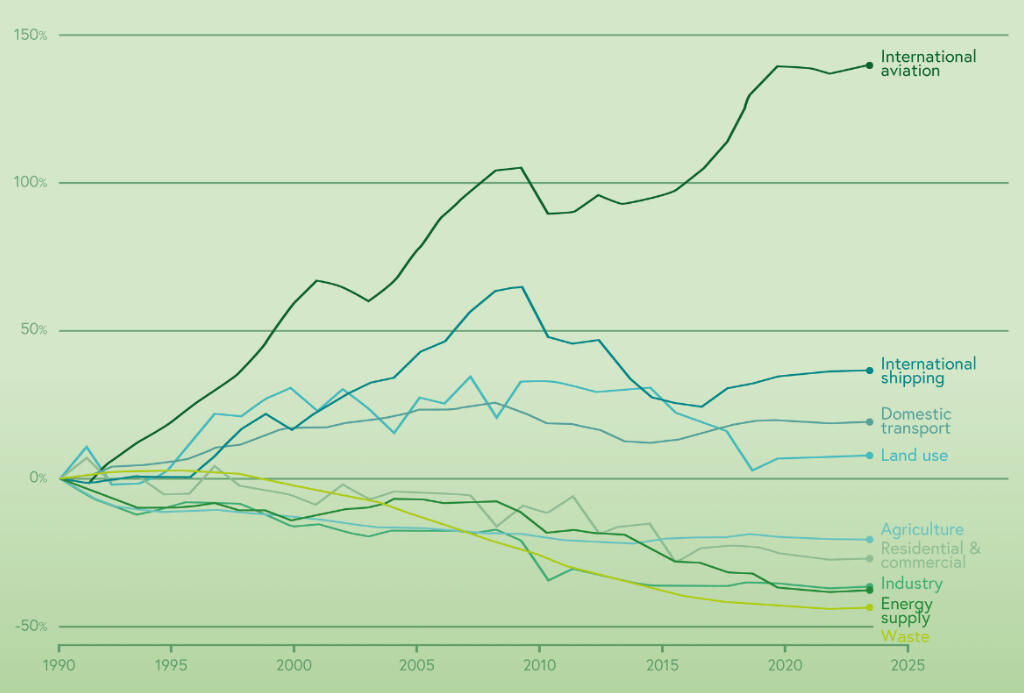
Every flight’s footprint is shaped by four factors:

Distance

Aircraft Efficiency

Fuel Type

Contrails
At BookBetter, we act on every part of this equation to make lower-emission travel possible.
We prioritize train options for short-haul routes, cutting emissions by 90% or more by connecting in places with exceptional rail connectivity.

We source from airports that prioritize ground operations with renewable energy & low emission ground transport to reduce overall carbon usage.
We allocate 100% SAF through RMI’s SAF registry, abiding most rigorous sustainability requirements.
We adapt flight paths to avoid contrail zones and prioritize direct flights to reduce environmental impact.
Sustainable Aviation Fuel (SAF) is an alternative fuel made from renewable materials like:
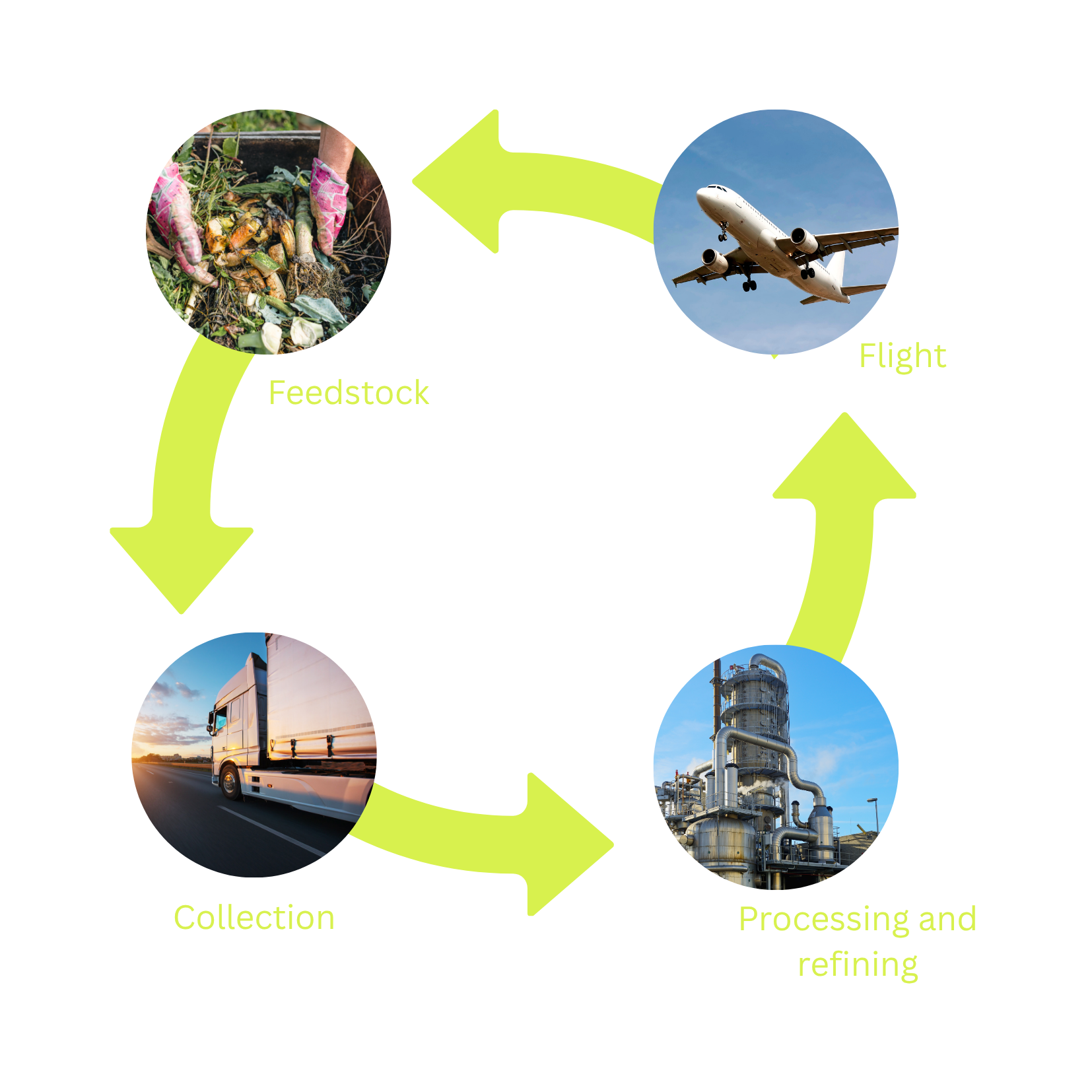
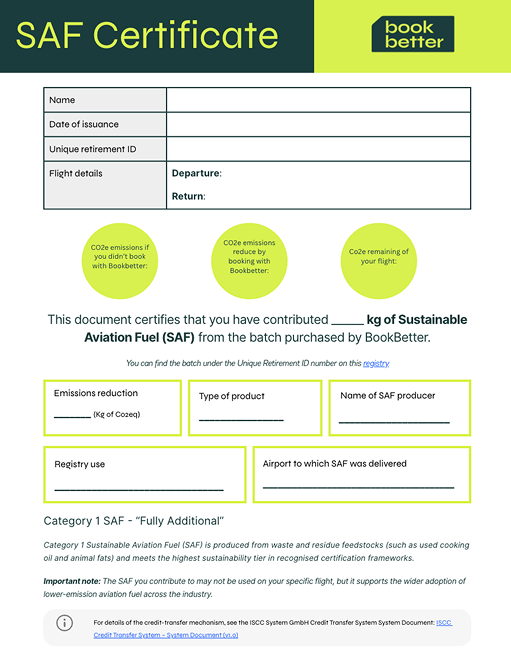
We provide SAF certifications that ensure transparency and accountability across every stage of production.
We use 3rd party registry systems including ISCC, RSB, 123Carbon and Assure
We source certified waste-based SAF, fully accredited to support new fuel production.
These certifications ensure the origin, production process, and emissions reductions of the fuel, offering full transparency at every step.
When you travel by plane, the vast majority of your trip’s emissions come from the flight itself. That’s why focusing on reducing the impact of your flight is the most important first step.
At BookBetter, we encourage trains or other lower-emission options instead of planes. But when flying is the only practical choice, we help you reduce the overall impact.